
Poppy Playtime Chapter 5
AGRO PRODUKCE STUDIO
Screenshots


editor reviews
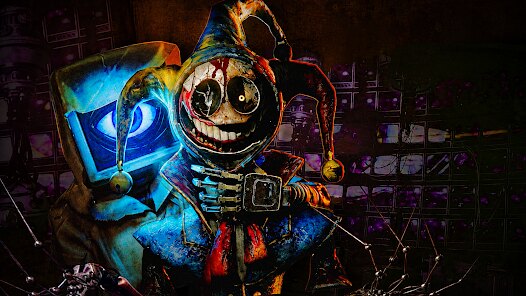
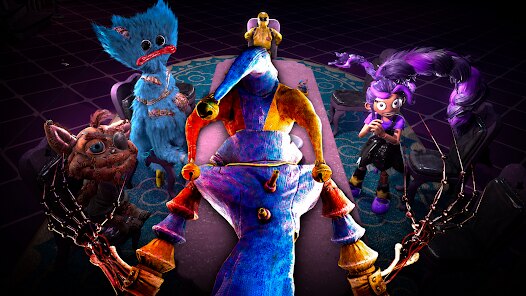
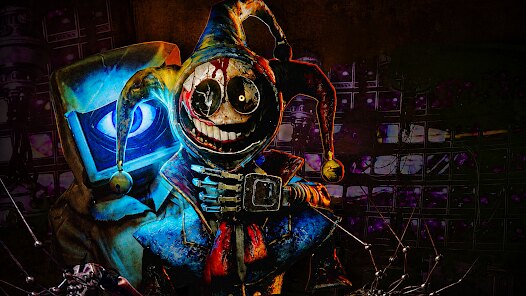
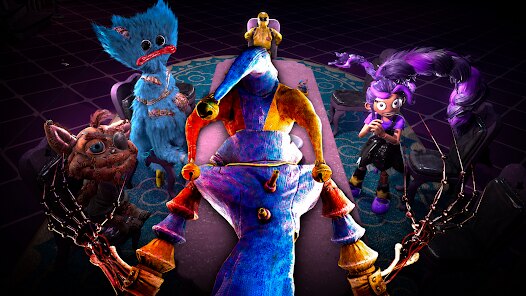
Poppy Playtime Chapter 5 throws you back into the abandoned halls of Playtime Co. with a promise of finality. This is the conclusion to the horror-puzzle saga that began with Huggy Wuggy looming in the vents, and it delivers exactly what you'd expect from a series that's grown from a simple chase scene into a full-blown narrative about corporate cruelty and forgotten experiments. If you've played previous chapters, you know the drill: you explore eerie rooms, solve environmental puzzles, and run from monstrosities born from failed toys. New players might feel lost in the lore, but the core loop is simple enough to pick up—shine your GrabPack's light, crack cryptic codes, and survive. Initial impressions? The art style remains that unsettling blend of colorful 1950s innocence and industrial rot, which works beautifully. Trailers hyped up a bigger, scarier climax, and for the most part, it delivers on that promise. Whether you're a casual fan of horror games or a lore hunter obsessed with Ollie's true identity, this chapter aims to satisfy.
My personal playthrough was a rollercoaster of genuine tension and occasional frustration. The fun factor peaks when you're sneaking through the new toy factory sections, especially the Catnap-themed areas that play with darkness and sound in clever ways. Controls feel tighter than ever, and performance ran smoothly on my mid-range PC, which is a relief after some chunky frame drops in Chapter 3. The learning curve here is steeper—puzzles feel more layered, requiring you to remember details from previous chapters or explore every corner for clues. One standout mechanic was the new "disruption" device that lets you temporarily shut down security systems; it adds a nice strategic layer to escape sequences. Immersion is where this chapter shines brightest. The level design tells stories without words—a child's drawing on a wall, a shattered test tube, a half-eaten snack near a locked door. It's haunting. That said, some stealth sections dragged on too long, and a few boss chases felt scripted rather than reactive, which broke the tension for me.
Comparing Poppy Playtime to other horror games like Bendy and the Ink Machine or Little Nightmares, this series has always leaned harder on its puzzles and lore than on pure terror. Chapter 5 leans into that identity even more. What it does better than competitors is its reward system for attentive players—finding hidden tapes or notes that contextualize the tragedy feels meaningful, not busywork. The community around this game is also notably less toxic than most online horror spaces, which is a rare gem. Honest talk: the game isn't revolutionary. It's a refined version of what we've seen before, but the emotional weight of the finale, especially regarding the Prototype and Poppy's fate, gives it a punch that makes the journey feel worth it. It's not perfect, but it knows what it is and commits fully.
features
- GrabPack 2.0 🧤 — The iconic multi-tool returns with refined mechanics. Now you can extend both hands independently, which opens up dual-puzzle solving like carrying a battery while pulling a lever. It feels intuitive on keyboard and mouse, though controller users might fumble initially. The hand colors indicate which actions they trigger, adding a subtle visual layer that prevents guesswork.
- Disruption Device ⚡ — This new gadget lets you temporarily disable electronic security systems, including cameras, force fields, and robotic enemies. It has a cooldown and limited charges you can find scattered around. This mechanic forces you to plan escape routes rather than just sprinting through, rewarding patient players who scout ahead.
- Environmental Storytelling Module 🏚️ — A soft feature, but critical. The game now has interactive notes that change based on your actions. For example, if you skip a side area, the narrative text updates to reflect your "ignorance" of certain events. It's a subtle way to make each playthrough feel unique, even if the main path stays linear.
pros
- Atmospheric World-Building 🎭 — Playtime Co. has never felt more alive and dead at the same time. Every room tells a story through broken toys, scribbled warnings on the walls, and flickering lights that signal danger. The audio design complements this perfectly—distant machinery hums, soft whispers that may or may not be your imagination, and sudden silence before a jump scare. It's immersive without feeling cheap, which is a fine line horror games often stumble on.
- Improved Enemy Variety 👹 — Chapter 5 introduces smarter AI for enemies. The Catnap clone no longer follows predictable patrol paths; it adapts to your behavior, hiding near shortcuts you've used before. The Prototype sections are genuinely unsettling because you never know when it will strike. This unpredictability keeps the tension high and prevents the "I've memorized this pattern" burnout that plagues earlier chapters.
- Narrative Payoff 📖 — The ending ties up loose ends from previous chapters—Ollie's identity, Poppy's motives, and the fate of the employees—in a satisfying way that respects the lore without over-explaining everything. It leaves room for ambiguity but gives enough closure to feel complete. Fans of the Toys of Poppy Playtime ARG will appreciate the subtle references hidden in background details.
cons
- Pacing Issues in Mid-Game ⏳ — The middle third of the chapter drags significantly. There's a long sequence where you shuffle between identical-looking rooms solving backtracking puzzles that feel padding rather than meaningful exploration. It's the kind of section where you can feel the runtime stretching, which breaks immersion and makes you want to rush through rather than savor the horror. Shorter, more focused set pieces would have been stronger.
- Boss Fights Feel Scripted 🎬 — The encounters with the main antagonist lose impact because they rely on predetermined trigger points rather than dynamic AI. You wait behind a desk, the creature walks past, you move two steps, it lurches again. It's functional but feels like a theme park ride rather than a life-or-death struggle. Compare this to Alien: Isolation's reactive xenomorph, and the difference is stark. Reactive behavior would have elevated these moments from decent to memorable.
- Lack of Replay Value ♻️ — Once you've seen the ending and collected most hidden lore pieces, there's little reason to return. There are no difficulty modifiers, no score rankings, no optional challenge modes. The linear story is the whole experience. For a game priced in the triple digits (when bundling all chapters), this feels underwhelming compared to rivals like Resident Evil or Amnesia that offer modes to extend engagement. A speedrun timer or hidden ghost encounters would have added a second life to the experience.
Recommended Apps
![]()
Bus Frenzy - Traffic Jam
CrazyLabs LTD4.5

![]()
Poppy Playtime Chapter 5
AGRO PRODUKCE STUDIO0![]()
Miga Town: My World
XiHe Digital (GuangZhou) Technology Co., Ltd.4.2![]()
Gugu Gaga Penguin: Mini Games
Kids Games LLC3![]()
Halloween Home
CASUAL AZUR GAMES3.8![]()
Plants vs. Zombies™
ELECTRONIC ARTS4![]()
Ojol The Game
CodeXplore4.5![]()
Five Nights at Freddy's 4
Clickteam USA LLC4.6![]()
Steal It All!
Kids Games LLC4.7![]()
Carnival Tycoon: Coin Games
Wild Candle Spin LLC4.3![]()
BMX Cycle Extreme Bicycle Game
PlayFlix4.7![]()
Vector Classic
NEKKI4.6![]()
Minecraft: Dream it, Build it!
Mojang4.3![]()
Frozen Honey ASMR
CrazyLabs LTD4.3![]()
Pixel Flow!
Loom Games A.Ş.4.2













Hot Apps
-
![]()
Ticketmaster-Buy, Sell Tickets
Ticketmaster L.L.C.3 -
![]()
Domino's Pizza USA
Domino's Pizza LLC4.7 -
![]()
Venmo
PayPal, Inc.4.2 -
![]()
letgo: Buy & Sell Used Stuff
letgo3.3 -
![]()
Passport Parking
Passport Labs, Inc.2.5 -
![]()
Google Chat
Google LLC4.4 -
![]()
Google Gemini
Google LLC4.6 -
![]()
WhatsApp Messenger
WhatsApp LLC4.4 -
![]()
Telegram
Telegram FZ-LLC4.1 -
![]()
Facebook
Meta Platforms, Inc.4 -
![]()
Sora by OpenAI
OpenAI4.7 -
![]()
Yuka - Food & cosmetic scan
Yuka App4.7 -
![]()
Pinterest
Pinterest4.5 -
![]()
Grok
xAI4.9 -
![]()
Hulu: Stream TV shows & movies
Disney4.5 -
![]()
Chai: Chat AI Platform
Chai Research Corp.4.3 -
![]()
Bolt: Request a Ride
Bolt Technology4.8 -
![]()
Cash App
Block, Inc.4.6 -
![]()
DeepSeek - AI Assistant
DeepSeek4.2 -
![]()
Microsoft Teams
Microsoft Corporation4.6 -
![]()
ChatOn - AI Chat Bot Assistant
AIBY Inc.4.4 -
![]()
FaceApp: Perfect Face Editor
FaceApp Technology Ltd4.4 -
![]()
PayPal - Send, Shop, Manage
PayPal Mobile4.3 -
![]()
Klarna | Shop now. Pay later.
Klarna Bank AB (publ)4.3 -
![]()
Duolingo: Language & Chess
Duolingo4.7 -
![]()
Signal Private Messenger
Signal Foundation4.5 -
![]()
Ford™
Ford Motor Co.4.7 -
![]()
Google Maps
Google LLC4.2 -
![]()
GasBuddy: Find & Pay for Gas
PDI Software, Inc.3.1 -
![]()
SiriusXM: Music, Sports & News
Sirius XM Radio Inc4.8






























Disclaimer
1.Apkspack does not represent any developer, nor is it the developer of any App or game.
2.Apkspack provide custom reviews of Apps written by our own reviewers, and detailed information of these Apps, such as developer contacts, ratings and screenshots.
3. All trademarks, registered trademarks, product names and company names or logos appearing on the site are the property of their respective owners.
4.Apkspack abides by the federal Digital Millennium Copyright Act (DMCA) by responding to notices of alleged infringement that complies with the DMCA and other applicable laws.
5.If you are the owner or copyright representative and want to delete your information, please contact us [email protected].
6.All the information on this website is strictly observed all the terms and conditions of Google Ads Advertising policies and Google Unwanted Software policy.
7.Apkspack.com is an independent, information-only website which is 100% free to all the users.